Friday, March 1, 2019

Onion Sets

As we push through the ups and downs of this cold late winter, I am reminded about a question that we seem to get every year….do I need to plant onion sets or onion transplants? 

Onion sets are typically what we plant when we want green onions (scallions) early, or larger onions with more of a traditional onion flavor later on. Onion transplants, sometimes just called plants or starts, are typically sweeter tasting onions that are sold in bundles identified by their names. Popular varieties include Red Candy, Yellow Candy, Texas 1015, Yellow Granex (the Vidalia Onion) and Bermuda. 

Typically sets can be planted in mid-March and plants in early April. Of course, this all depends on the curveballs that Mother Nature throws us! Onions have shallow root systems, and need regular watering and fertilizing in order to get the best results. Managing weeds is also crucial for a decent bulb size! 

Our sets are in! We have red, yellow, and white sets, as well as my personal favorite Cippolini onions. We should start getting plants in well before St Patty’s Day, and as always, the most popular varieties tend to go fast! 

If you have any questions about onions or what you might need to be successful, stop by the Garden Center. We’re always glad to help!

-Mike Ray

Earthworm Castings

What’s New?...Worm Poop!
Kansas Kirk’s Gardenworks is some of the finest quality worm castings you can find anywhere! 
We are thrilled to carry this new local product! Produced only about 50 miles from Skinner’s, Kirk Junod is one of the nicest guys you’ll ever meet, and is super passionate about organic gardening…and WORMS! 

Kirk feeds his cultured night crawlers, organic peat moss and local grains and their poop, aka…worm castings…is a natural fertilizer that provides your plants nutrients to help them grow. Each bag is packed full of worm castings and does not contain leftover peat moss or fillers like other worm castings products. This is great for vegetables, annuals, lawns, seed flats, trees and shrubs, and more…even worm casting tea!

Tuesday, November 13, 2018

Big Beautiful Amaryllis!


Big Beautiful Amaryllis!
This time of year things begin to slow down a little bit for me.  The weather is much cooler, it gets dark earlier, and I spend quite a bit more time inside.  I still love to watch plants grow, however, so I have to get creative with how that happens inside. 
For several years now, my wife and I have really enjoyed growing amaryllis bulbs inside in pots.  They come in a variety of colors and shapes, and have quite a stunning presence on holiday tables and just about any place we put them. 
Here at Skinner’s we have a huge variety of the largest amaryllis bulbs you can find!  The coolest thing about having the biggest bulbs is that they produce multiple very large blooms.  We regularly get 2 to 3 stalks per bulb, each producing 3-4 flowers apiece!
You still have plenty of time to get your bulbs started before your holiday season begins.  And, right now all of our amaryllis bulbs are BOGO!  That’s right, 2 for the price of 1!  They have been flying out of our store, as this kind of deal doesn’t come around very often.  Don’t miss out on this great opportunity to fill your home with color and blooms today!

Tuesday, November 21, 2017

What's Dormant Seeding?


Many of us understand that the best time to seed or over seed your lawn is in the Fall.  Typically the time frame is from Labor Day through the second weekend of October.  We also know that is usually a very busy time for most of us.  So what happens if we didn't have a chance to work on the lawn then like we had hoped?  Maybe you should consider dormant seeding.

Dormant seeding is performed like fall seeding, except it is done when the soils have cooled enough to prevent germination. Usually that time in Kansas is sometime after Thanksgiving. In a dormant seeding operation, the seed will lay in the yard, "dormant", until next spring when the soils warm back up.
There are benefits and pitfalls to dormant seeding. The main benefit of dormant seeding, compared to spring seeding, is avoiding the mud and getting seed up early in the season. Many times in the spring the snow is melting or it is raining, making it difficult to get out and work the ground for seeding.  The pitfalls of dormant seeding come in the form of wind and water erosion moving the seed around.  In some situations, if the seed is not incorporated into the soil well, or if the soils are sloped and not covered with erosion control material, the seed can be washed away or moved around on the soil.  If you suspect erosion will be a problem, use erosion control material like Curlex to prevent erosion, or wait until next spring to do your seeding. 

Remember that any turf grass that gets established in the spring rather than the in the fall is going to have a less extensive root system and will be less mature than its fall seeded counterpart. Therefore, monitor both spring-seeded and dormant-seeded areas a little closer. They will need watering sooner than other areas during dry spells.

We are always here to help with any questions that you may have, including whether or not dormant seeding is right for your situation!

Thursday, November 16, 2017

Focus on Natives: Bittersweet


Focus on Natives...Bittersweet
A fall walk in the timber just wouldn't be the same without this bright colored favorite. It goes unrecognized most of the season, but when its fruits take on the bright orange their known for, Bittersweet really grabs your attention.

This native plant is a vine. It is commonly found growing in the underbrush of wooded areas, in fencerows and on the edges of the timber. Although it is frequently found growing in shady areas, it can also be grown in more sunny areas...all it needs to something to twist around as it grows...and lots of room! In the wild it can be found growing 20-30' tall...or more!

The fruits are really what everyone falls in love with. The fruit capsules ripen late in the season, around September, orange in color and popping open to reveal red-orange fruits. Once ripe, they are often harvested by humans for decoration. Birds love them too, helping to disperse their seeds as they feed on them.

Interestingly, bittersweet is primarily dioecious...that's the fancy, plant term for plants that have male and female flowers on separate plants, like hollies. That means only the female vines produce fruits which is why some vines you come across never do. In the landscape, it is always best to plant one of each to ensure fruit production or plant a self-fertile form like 'Autumn Revolution'.

One last note. A very similar looking cousin called Oriental Bittersweet should be avoided. This non-native looks almost identical to its North American counterpart, but it tends to be more aggressive and particularly back east, it has become invasive. Stick with our native.

Saturday, April 8, 2017

Grow Your Own Asparagus...It’s Easy!


If you aren’t growing asparagus in your garden, it’s time start!
Few vegetable crops offer so much harvest with so little input. When planted correctly, a patch of asparagus can offer 15-20 years of production...all from one planting. That’s a lot of years of good eating!
This is possible because asparagus is perennial. That means you plant it once and it comes back each year. That’s pretty cool but it also means you should do a little planning before you plant. Here are a few things to consider.
Choosing a Location - Because your plants will be growing in the same place for up to 20 years, you should think about how your planting will impact your existing garden as well as your future landscape plans. It takes a couple of seasons to get your new plants up to full production, so you don’t want to have to remove them because of bad planning. Asparagus plants will grow up to about 4-6’ tall and almost as wide. Give them some room and site them correctly. You will be happy you did.
Think About Exposure - Asparagus wants lots of sun. Your spring harvest of spears is directly connected to how well your plants grew the previous season. Providing a sunny location allows your plants to grow their best, enabling vigorous spear growth in the spring That translates to an abundant harvest.
Decide How Many Crowns to Plant - With the more productive varieties we have available today, 5 crowns for each person is just about right. If you really love asparagus, aim for 10 per person. If you end up with too much, don’t worry. You’ll find that extra asparagus is a lot like extra tomatoes...it’s always easy to find a home for!
Improve the Soil - Pick areas with good soil but still take time to improve it before you plant. Keep in mind that you will be planting once and then hopefully harvesting for the next 20 years. Do what you can to improve the soil while you have the chance. Work generous amounts of compost into the ground. Use compost that you have made yourself or utilize some of the quality compost products we have available. Apply 2-4” over the planting site and then work deeply into the soil, incorporating down as deep as you can. You will be planting crowns 8-9” deep, so really get in there and dig!
Choose Your Varieties - We have four varieties of asparagus for you to choose from. All are very productive and disease resistant.
  • Jersey Jewel - One of the earlier all-male ‘Jersey Hybrids’ from Rutgers University. Very productive with good flavor and great disease resistance.
  • Jersey Knight - This is another all-male ‘Jersey Hybrid’. It is very productive with large green spears and good disease resistance.
  • UC-157 - This is our most popular variety and has been for years. It has performed extremely well in Kansas gardens for decades. It is a heavy producer of high quality spears and can be harvested longer into higher temperatures, something that frequently impacts that latter end of the harvest season.
  • Purple Passion - Spears of this variety are purple in color and noticeable sweeter, with a sugar content up to 20% higher than green varieties. It does produces fewer spears, but they will be much larger in diameter, making up for the difference. Because they produce fewer spears, this variety could be planted a little closer together, as close as 8-12”. This is our 2nd most popular variety.
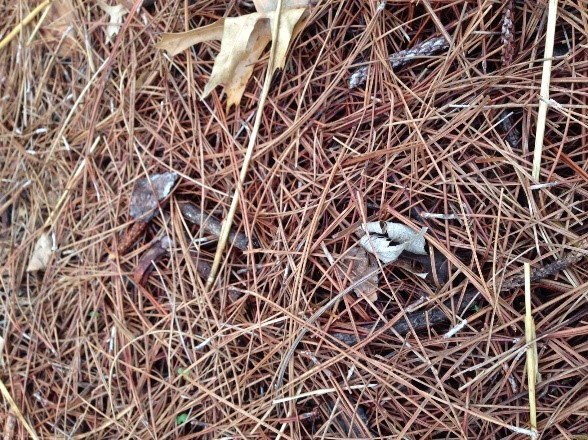
Plant Your Crowns - You will be purchasing bare root asparagus crowns. They will look just like the one in the picture below. Plant your crowns about 8-9” deep, about 18-24” apart. If you’re planting your asparagus in a straight row, it may be easier to dig one long trench rather that lots of individual holes. Work in Fertilome Garden’s Special fertilizer following the label instructions found under “Root Crops” to the bottom of the hole.
Place the crown on a slight mound of soil, fanning the roots out, and then cover with soil. Fill the hole (or trench) up about half way, leaving the rest of the soil for use later. Water in your plants and then wait for new growth to emerge. Once the ferny tops have grown well beyond the hole, use the remaining soil to backfill the planting hole the rest of the way.
Mulch Your Plants - Once your crowns have been fully backfilled, top-dress the whole area with compost (about 1” deep) and then mulch to control weeds with Alfalfa Mulch or Pine Straw Mulch. Mulching will improve the yield in future years by eliminating a lot of annoying weed growth. It will also make your planting look nicer and as an added plus, it will provide a clean surface to walk on during the spring harvest when the soil can often be wet and muddy.
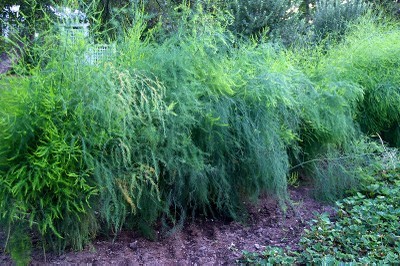
Let Your Plants Grow - Year one is all about getting your new asparagus plants established and growing strong. You won’t harvest any spears this first year. Just let your plants grow as much as they can, fertilizing and watering as needed to encourage good growth. You will be able to harvest lightly next spring and be in full production the following year.
Asparagus can offer years of eating enjoyment, but you have to plant if first. April is a prime month to set out new crowns, so come on out and get yours today!
  

Friday, April 7, 2017

Mulch Everything!


When Mother Nature dumps much needed rain on us at the very beginning of Spring, many of us celebrate the fact that warm weather and lots of green are sure to follow.
The random weather patterns have us feeling uncertain about what each new day will bring. Will it be hot, cold, wet, windy or a random combination of all of the above? We have many customers that have cleaned up the flower beds, finished their pruning, planned out their vegetable gardens, and are still wondering what they could/should be doing. I will ask you one of the questions I often ask them: have you mulched yet?
Mulching your garden, flower beds, raised beds and around every tree is crucial, if not necessary, for the long-term survival of your plants. We offer a variety of mulches here at Skinner’s with different textures, colors and sizes. We have four selections available in bulk, and even more bagged ready to load up. Regardless of type or color, they all serve the same main purposes:
  • Mulch helps conserve the amount of water you use and reduces evaporation.
  • Mulch helps control weed growth.
  • Mulch helps regulate soil temperature.
  • Mulch will enhance the curb appeal of any flower bed or planting.
What should you mulch? Everything. When should you mulch? Every time you plant. We know that anytime you spend time, energy and money to improve your yard and garden you are making an investment. Protect your investment and give it the best chance of success by mulching regularly. If you have questions about our mulch options, please come visit us in the garden center!
-Mike Ray