Hydrangeas
Hydrangeas
are one of our most popular groups of flowering shrubs, and they should
be. Large flower clusters that bloom over a long period of time are a
real eye catcher. And with so many great selections, it’s easy to find
one you will like, but it can also get a little confusing. Here are a
few insights to help make your selection process a little simpler.
We do
four different kinds, or species, of hydrangeas. (We actually do a fifth
species, but Climbing Hydrangea (Hydrangea anomala subsp. petiolaris)
is a vine and won’t be discussed here.) From those four types we have
dozens of different offerings. Each species has some general
characteristics that make it a little different from the others, and
knowing some of those differences is important.
First, a few lessons in Hydrangea terminology.
We start with...fertile vs. sterile.
Hydrangea’s
impressive blooms are made up of lots and lots of smaller flowers. Upon
closer examination, on many selections you will often be able to find
flowers of two different sizes within each floral cluster. Some will be
larger, the size of a quarter or maybe a half dollar piece; others will
be smaller, about ¼’ in diameter. The smaller ones are fertile flowers
that produce seed. The larger more showy ones, are sterile. It’s these
sterile flowers that intrigue gardeners. Most popular selections have
floral clusters that contain very large percentages of sterile, or
“showy” flowers, and in many cases, blossoms maybe made up entirely of
sterile flowers.
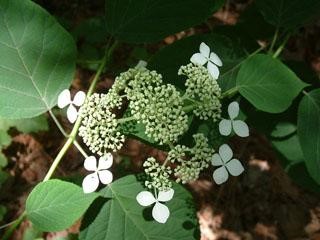
Here’s the second set of terms...lacecap vs. mophead.
|
|
 |
| lacetop |
|
In the wild, floral structures are made up of mostly fertile flowers,
adorned with a few adorned with a small number of sterile showy flowers.
In some species, the blossom is a rounded, flat-topped cluster, ringed
by larger sterile flowers. This floral composition is commonly referred
to a lacecap.
While
attractive, this floral composition certainly doesn’t catch the eye
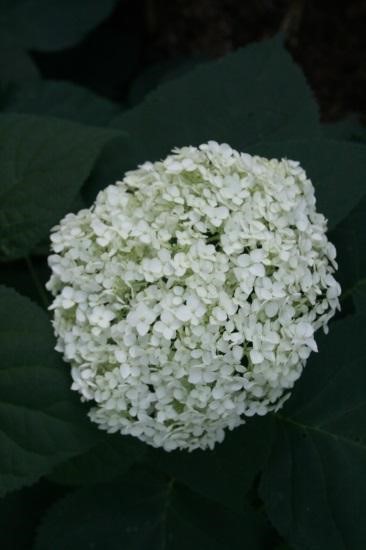
nearly as much as many of today’s popular garden forms. Most of these
selections have floral structures composed primarily of all sterile
flowers, producing a large rounded floral structures commonly referred
to as a mophead.
|
|
|
| mophead |
|
It’s easy to see why the mopheads are gardener favorites. They are
stunning! Their large showy floral clusters make an amazing show.
Now, a third set of terms...old wood vs. new wood.
The
first two sets of terms were interesting if you want better understand
what you are looking at or better understand floral description you may
be reading, but this last set is really important if you want to make
sure you know how to grow this garden beauty successfully.
Some
flowering shrubs produce flowers from buds created the previous season.
These buds remain dormant until the follow spring when they emerge to
put on their show. These plants are said to bloom on “old wood”. Other
flowering shrubs produce flowers from buds created in season on the
current year’s new growth. These are blooming on “new wood”.
Understanding this concept and knowing which plants bloom on old wood
and which bloom on new wood can help prevent pruning mishaps. Prune a
flowering shrub that blooms off of old wood during the late summer,
fall, winter or early spring, and you will be pruning off flower buds,
and no buds means no flowers. Conversely, things that bloom off new wood
can be pruned aggressively during those times without any fear of
cutting into flower production.
In the
Hydrangea world we find both and know which is which saves a lot of
frustration. Cut back a hydrangea that blooms on new wood during early
spring cleanups...no problem. The new growth of the season creates all
kinds of wonderful flowers and everyone is happy. Cut back a hydrangea
that blooms off of old wood at the same times...say goodbye to your
flowers. That doesn’t make for happy gardening.
Now for a quick look at the four Hydrangea species we grow.
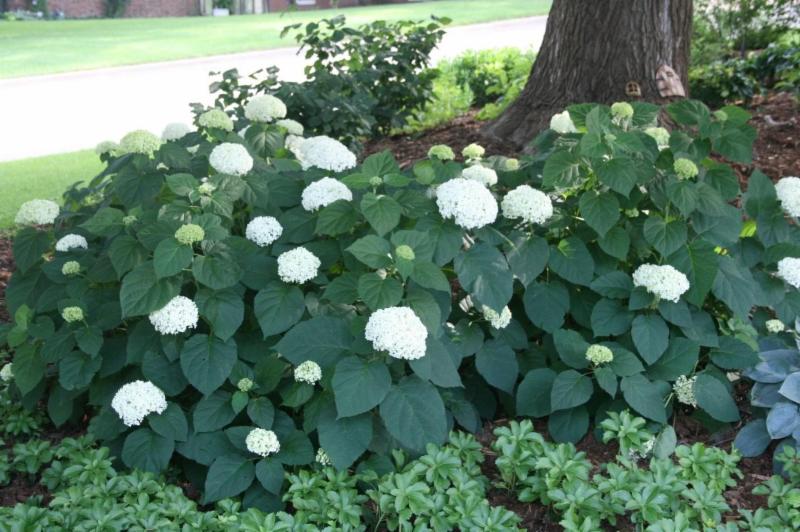 Smooth Hydrangea
(H. arborescens) -This is one of the most dependable and easy to grow
hydrangea species. It is a U.S. native, it is very hardy and it blooms
reliably. It produces flowers off of new wood in the spring, so heavy
pruning at the start of the season doesn’t bother it, in fact it’s
recommended. Although the species generally produces lacecap-type
flowers in the wild, these forms are rarely seen in gardens. Mophead
selections are what really catch the gardener’s eye, and one of the best
of those is a called ‘Annabelle’.
It
produces large white floral clusters (up to 8-12” across!) and produces
those in large numbers. This selection pretty much represents all of the
Smooth Hydrangea found in the nursery trade. It grows about 3-5’ tall
with a similar spread and does best in light shade. It looks best when
pruned back hard each spring, taking last year’s stems back to 6-12”
tall. It adds a nice brightness to shade gardens and is one of the
easiest Hydrangeas to grow.
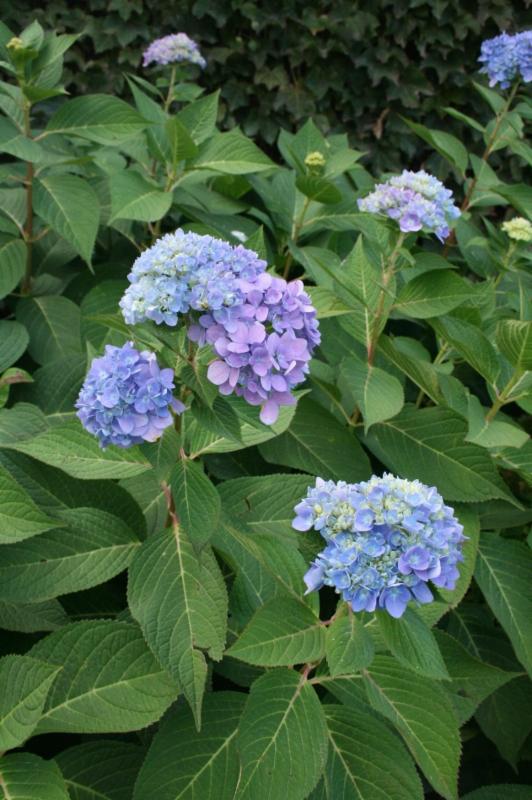 Bigleaf Hydrangea
(H. macrophylla)-This native to Japan looks a lot like Smooth Hydrangea
with one big exception, the color of the flowers. Instead of white,
this species has flowers of pink, red, lavender, purple or blue borne in
both lacecap and mophead floral stuctures. Many different forms exist
offering a myriad of flower color, plant size and floral structure
combinations, making their popularity understandable...in other parts of
the country. Their use here is less common because of two major
cultural problems, they are borderline winter hardy for us and they
bloom off of old wood...and that’s not a good combination. If cold
temperatures kill back topgrowth, then blooms the next season are scarce
to no existent. That makes this species difficult to enjoy here in NE
Kansas, and that has unfortunately prevented this species from being a
major garden plant in our landscapes...until recently that is.
About 10
years ago, a new selection made its way into American gardens. Known as
‘Endless Summer’, this new form came by way of a chance discovery in
the growing fields of a large wholesale grower. The original plant was
observed blooming very late in the season, something this species
doesn’t do. Upon further evaluation, it was found that this
specific plant had the ability to bloom not only in the spring off of
old wood, but again later in the season off the new wood. That almost
guarantees floral production in climates like ours where this species
tends to freeze back precious budwood each year! This new find,
ultimately named ‘Endless Summer’, has given many gardens in colder
areas the chance to enjoy the blooms of this species. However, in our
hot dry climates, we have found that ‘Endless Summer’ isn’t very happy
and overall success with this form has been less than what we had hoped
for. A newer selection known as ‘BloomStruck’ is improving our chances
for success. This selection is proving to be not only tougher, but also
appears to have even more reliable blooming habits.
In general,
this species gets about 3-5’ high and wide and does best if situated out
of the hot afternoon sun. If will need regular watering during hot, dry
summer months and most importantly, don’t prune it back! Remember, this
species produces its spring flowers off of old wood.
One more
interesting feature of this species is the ability of the flowers to
change color. If you flowers are pink, you can make them blue by adding
aluminum sulfate. If they are blue, and you’d like to make them pink,
add limestone. It’s just like magic!
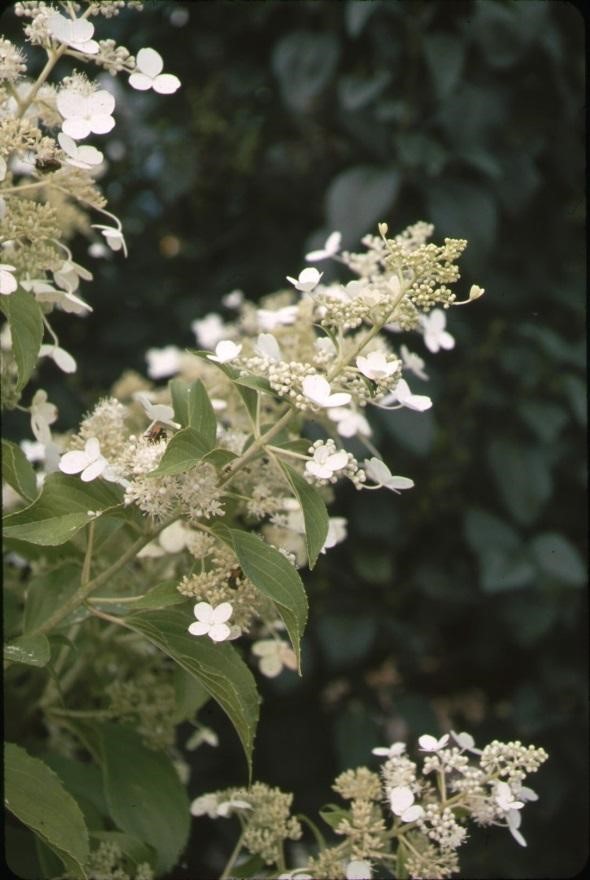 Panicle Hydrangea
(H. paniculata)-An Asian species enjoyed by American gardeners for a
very long time, this large shrub (6-10’ tall and wide), produces large
cone-shaped panicles of pure white flowers (sorry, no blue here!),
blooming off of the new wood of the season. That makes them hard to
screw up! They typically bloom mid-summer, although there are forms that
bloom as early as June (‘Quickfire’) and others that hit peak as late
as September (‘Tardiva’). There are also a whole host of selections that
offer different looking blooms (more or less sterile florets), larger
or smaller panicles and more recently, dwarf sizes (3-5’ tall and wide).
We carry a number of different selections and all make great plants.
This hydrangea actually prefers more sun than the others, although light
shade through the worst of the summer may be beneficial.
One
interesting feature on this species is the occasional production of pink
flowers. The flowers actually are still white, but towards the end of
the bloom sequence, if the weather is right (cooler weather, especially
at night), you will sometimes see the flowers fade into a rose-pink as
they finish. Despite what you may read or hear about, this is
unfortunately a fairly rare occurrence in our climate but it does
occasionally happen, so enjoy when it does!
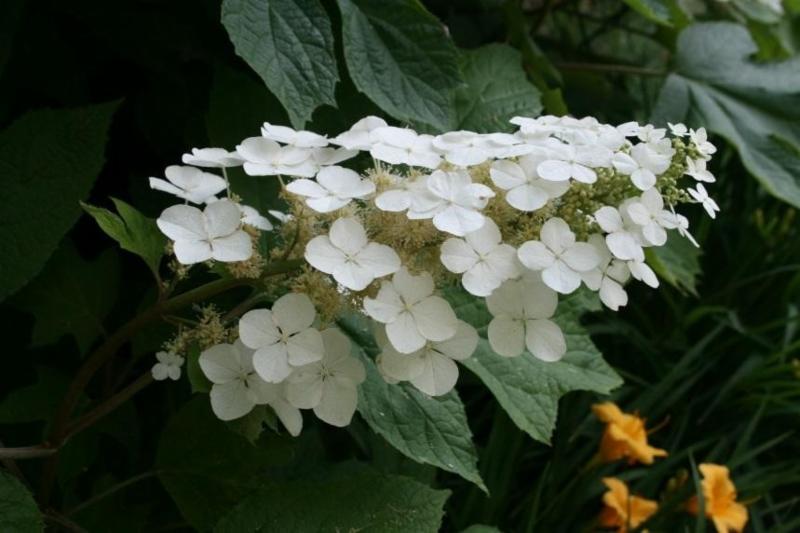 Oakleaf Hydrangea
(H. quercifolia)-This is one of the best! This large American native
shrub commonly grows to 6-8’ with a similar spread. It has large,
oak-shaped leaves and large, cone-shaped flower clusters of pure white,
much like Panicle Hydrangea. It blooms off of old wood, so don’t prune
it during the dormant season! It has good winter hardiness and produces
flowers reliably every year. The straight species is common grown in
gardens and is impressive, but there are also many popular selections
that offer variations in floral characteristics and variations in
overall plant size, including many good dwarf forms. It does best when
planted in areas that receive light shade, especially through the heat
of the day.
One
added plus to this species is great fall color. As cool weather sets in,
leaves will change to red, orange, yellow and burgundy. It’s quite a
show! This species can also have flowers that fade from white to
rosy-pink towards the end of the blooming sequence, although this is
rare for us in our climate as well.
There
are many great hydrangeas to choose from and deciding between them may
be difficult! Feel free to come out to the nursery and ask us some
questions. We can show you some different options and give you some
suggestions. If you want to check out all of the different Hydrangea
offerings we have, you can follow this
link to our online catalog to read more about them.
Have fun!

 This yellow-green plant is soon to be making its presence know it
lawns throughout the area. It's called Yellow Nutsedge and it's a
problem.
 Nutsedge gets its name from the small "nut-like" tubers it sets
underground. These are produced at the ends of underground stems, or
rhizomes. These tubers or "nutlets" can sprout immediately, forming a
new plant capable of producing more rhizomes and more tubers, or lay
dormant for years. Over the course of one growing season, one plant can
develop into hundreds of new plants, that combined have the potential
to produce nutlets numbering in the thousands. That's why quick control
is recommended.
 Now is the time to start treating. Use Hi-Yield Nutsedge Control and
make sure to follow label directions, using Spreader Sticker in with
your spray mix. That part is critical. Wait several days after mowing
before you treat to make it easier to see the problem areas. That also
allows time for more foliage to emerge, increasing the effectiveness of
your spray application. You should also wait several days after
applying before you mow to give things a chance to move through the
plant.

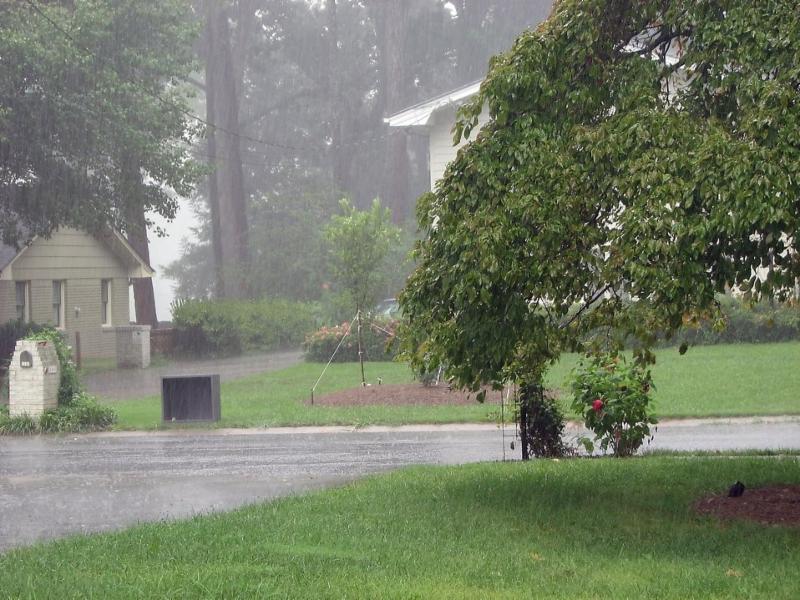
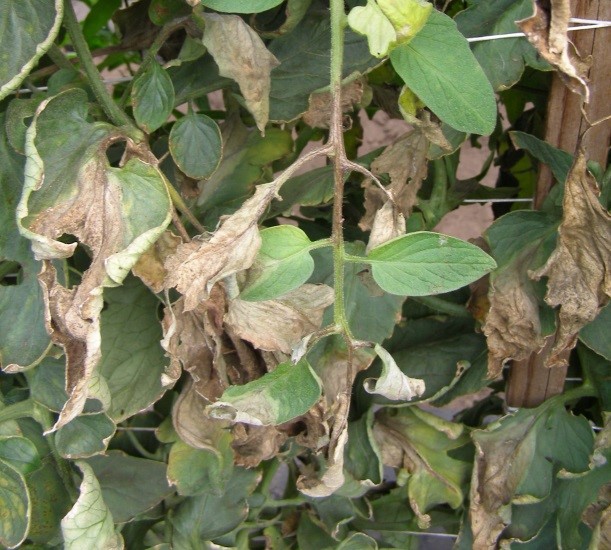 Tomatoes -
One of the more common complaints about tomato plants is related to
leaf diseases. Early Blight and Septoria Leaf Spot are common in our
vegetable gardens and often end the tomato season prematurely.
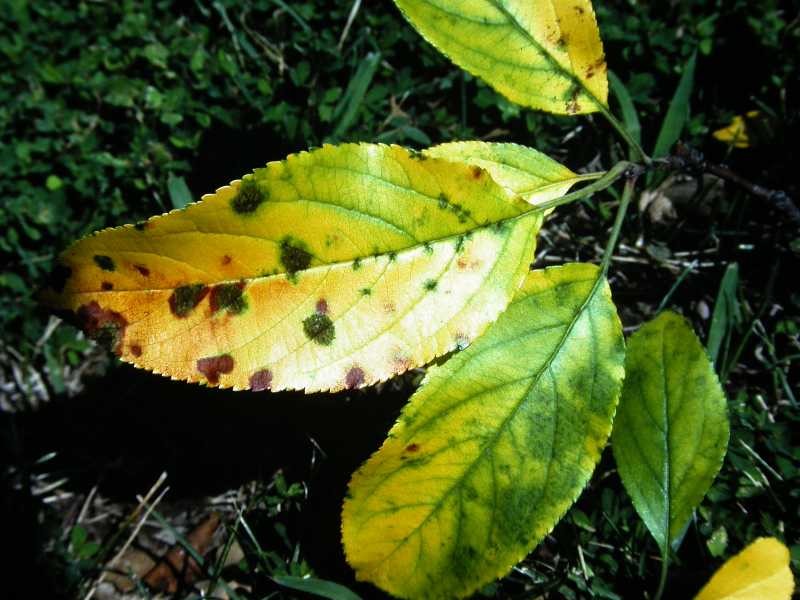 Fruit Trees -
If you have done a good job keeping your fruit trees sprayed for leaf
and fruit diseases already, don’t stop now! If you haven’t been applying
anything, you may need to get started. We have several good
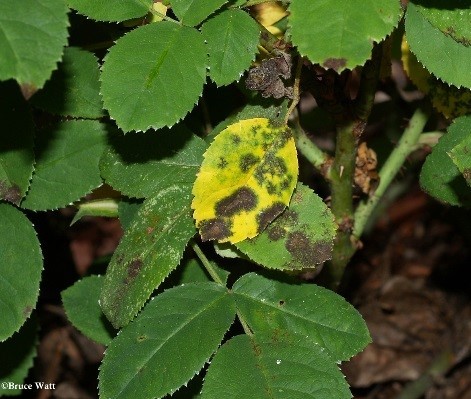 Roses -
 Lawns -
 Many homeowners find that all the great growth of spring also brings
along with it a noticeable growth of weeds in the lawn...weeds that
don’t look good and that are choking out the lawn.